Skip to content
Coastal construction: key decisions for the envelope
Coastal building envelope design isn’t just “ordinary construction with a nice view.” In coastal environments, wind-driven rain, salt and constant humidity mean you must design the building envelope as a system, not merely a finish.
The envelope (façade + windows and doors + seals + anchors + waterproofing + terminations) is the core of coastal building envelope design. It protects the investment, the interior and daily operations, and on the coast it’s designed to deal with real failures such as moving joints, corroding screws, degrading sealants, pressure changes, vibration and water that seeps in by capillary action.
Below is a practical framework for envelope decisions with a risk mindset—what to prioritize, what to detail and what to coordinate from the start so you don’t end up with expensive “patches” later.
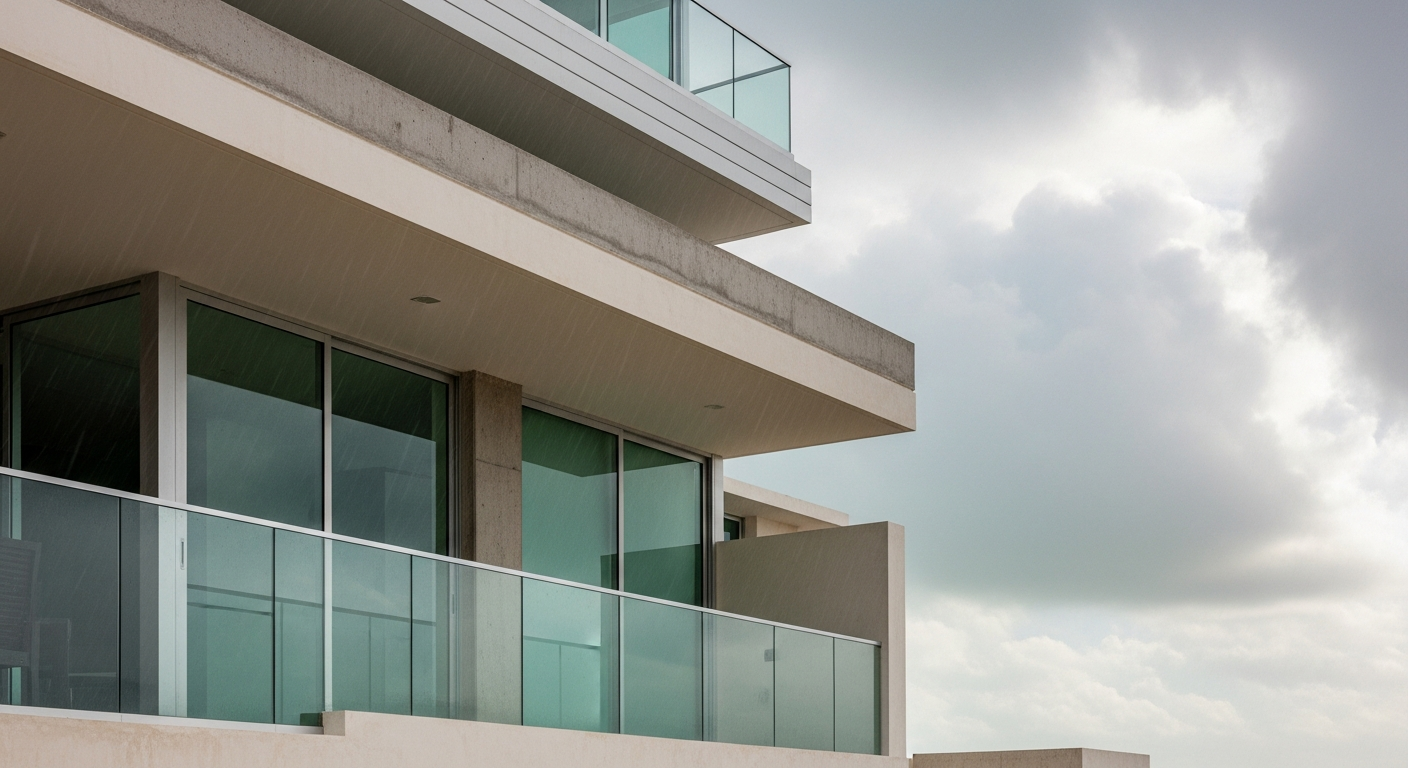
1) Enemy #1 isn’t rain—it’s wind‑driven rain
On the coast, water rarely falls “quietly.” It arrives under pressure and from a direction. This changes everything:
- A seal that works in a city may fail when suction and pressure alternate.
- A well‑intentioned flashing can become a channel for water entry if it has no real drainage.
- Persistent moisture accelerates corrosion of hardware and fixings, weakening critical points over time.
Design should start from a simple principle: if water gets in, it must have a way out; and if the wind pushes, the envelope must have layers and redundancies, not a single “line of defence”.
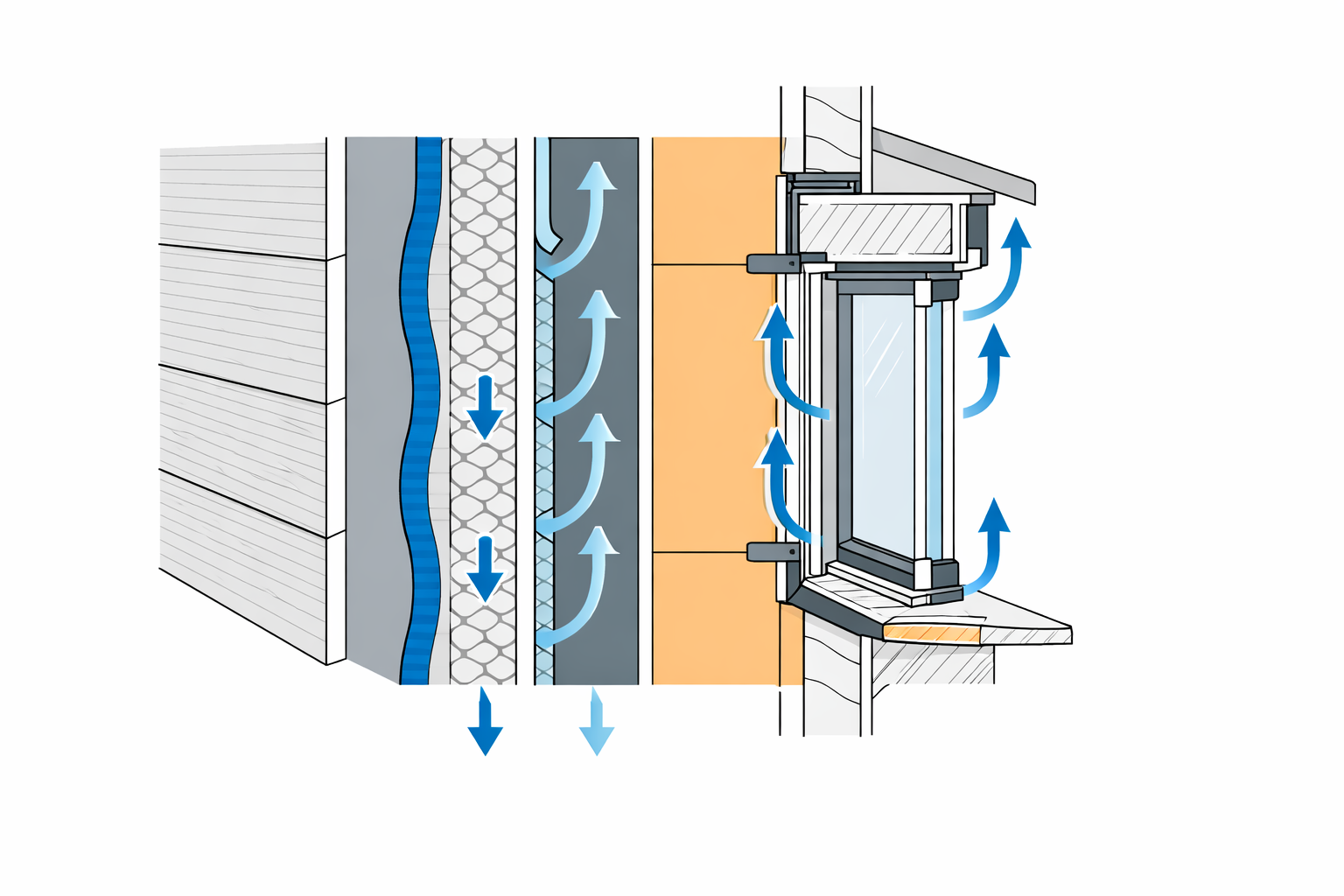
2) Think in layers: primary barrier, secondary barrier and drainage
A robust envelope doesn’t depend on a “miracle sealant” but on a system:
- Outer layer: protects against direct impact (finishes, panels, cladding, louvres, etc.).
- Water‑control layer: membranes, flashing and continuous, well‑integrated barriers.
- Drainage/ventilation layer: space for water to flow down and out and for the system to dry.
- Air/tightness layer: continuity at joints, transitions, penetrations and perimeters.
- Transition details: where you really win or lose—corners, material changes, terminations, connections to slabs and openings.
A common mistake is buying “premium” materials but then losing performance because transitions are poorly resolved.
3) Openings rule: windows, doors and their perimeters
In hotels, high‑end residences and beachfront projects, openings are the most exposed points—not only because of the glass but also due to the perimeter, anchors, sealing and material compatibility.
Good‑practice checklist:
- Design perimeters with real drainage and overflow, not just sealing.
- Provide redundancy so the system doesn’t rely on a single outlet.
- Respect tolerances: structures move, and the system must absorb this without opening water paths.
- Ensure anchoring and fastening suit the substrate (concrete, block, steel, etc.).
- Consider corrosion from the start: hardware, screws, plates and contact points.
4) Corrosion: if you don’t plan for it, you pay for it
Salinity doesn’t “arrive one day”—it’s always present. And its cumulative effect is severe if you don’t design for it.
Key decisions:
- Specify hardware/fasteners suitable for the environment (and avoid incompatible “mixes”).
- Separate materials where there is a risk of galvanic corrosion.
- Design for maintenance: access, replacement, and inspection of critical points.
- Avoid “water traps”: cavities where water accumulates and never dries.
A well-built envelope is not the one that “holds today,” but the one that remains stable over time.
Coordination with Specialists
There is a point in every project where the envelope stops being a concept and becomes a sequence of concrete decisions: what gets installed first, where it is sealed, what gets tested, how it is inspected, and what tolerances are acceptable.
This is where early coordination with specialized teams prevents rework. The goal is not to “make it more complex,” but to eliminate uncertainty before building: review critical points, validate material compatibility, confirm drainage paths, and ensure that what is drawn can actually be built.
In hurricane-exposed projects, builders often coordinate with specialized mitigation teams such as Hurricane Solution once façade constraints and operational requirements have been defined.
5) Details that fail the most (and how to prevent it)
If I had to bet where leaks or early degradation will appear, it would almost always be in:
- Slab–façade connections: plane changes and penetrations.
- Corners and terminations: where layers are interrupted.
- Penetrations: installations, supports, railings, lighting, equipment.
- Thresholds: entry doors, terraces, level changes.
- Material transitions: concrete to aluminum, panel to block, etc.
Practical prevention:
- Require “constructive” details, not just aesthetic ones: how it drains, ventilates, and seals.
- Review shop drawings focusing on barrier continuity.
- Perform site inspections using an envelope checklist (not just “finishes”).
6) Testing and quality control: what is not measured is assumed
The envelope should not depend on faith. It should depend on verification:
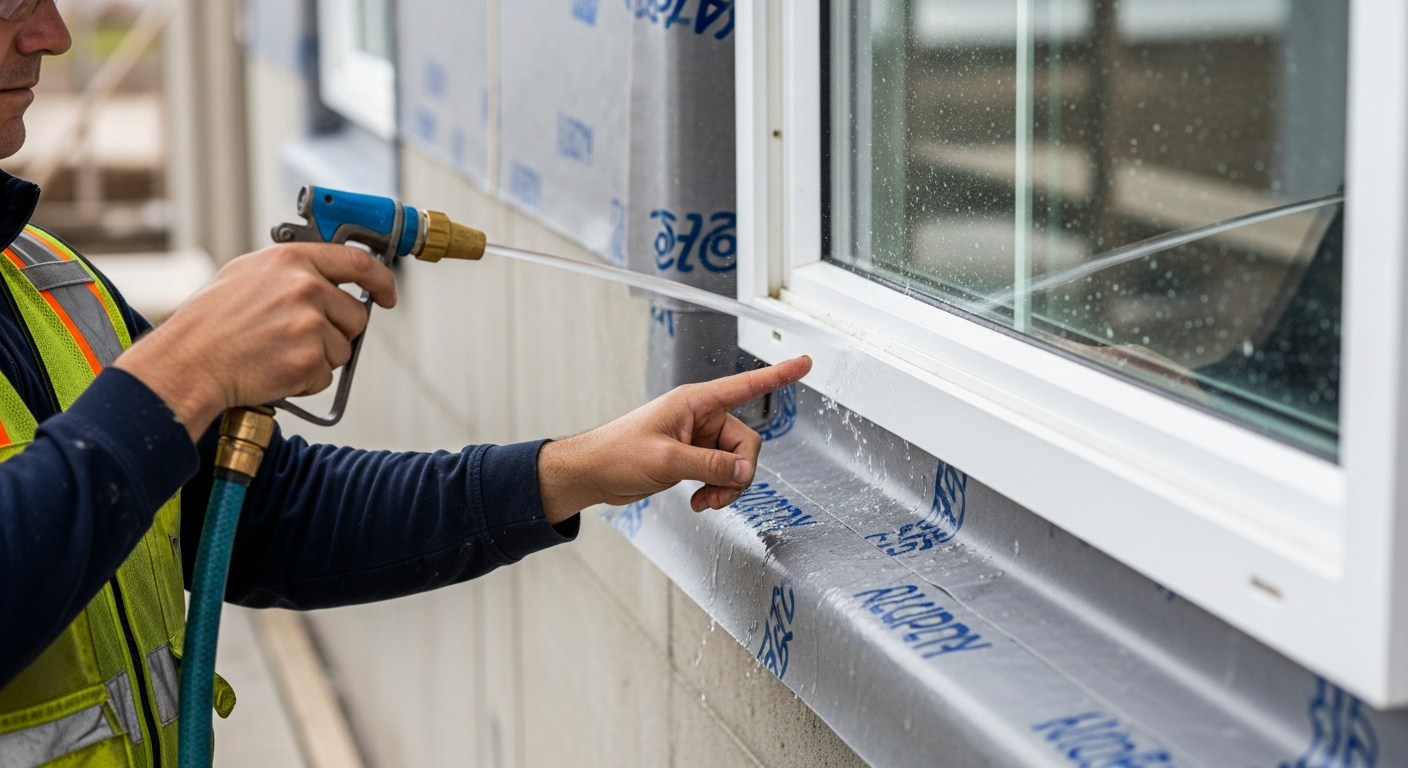
- Water testing where it makes sense (before closing interiors).
- Stage-by-stage inspection of seals and membranes.
- Photos and logs of critical points.
- Clear acceptance criteria (what gets corrected and when).
In coastal projects, the cost of fixing things late multiplies: interiors, furniture, operations, guests, and reputation are already involved.
7) Conclusion: the envelope is not a “finish”—it is the project’s insurance
When the envelope is properly defined, it reduces operational risk, maintenance, and unpleasant surprises. The best practices are not visible in the final photo… but they are evident in durability, in the operator’s peace of mind, and in consistent performance under real weather conditions.
If you are building on the coast, the correct order of thinking is:
- Envelope and risk
- Details and transitions
- Coordination and installation sequence
- Quality control and verification
- Finishes
Because when the envelope is done first (as a system), everything else becomes simpler.