Original Blog Content (Rewritten to Match Prompt)
Over the past few years, tiny homes have quietly shifted from a fringe concept into a serious category within residential construction. What began as a minimalist movement—often associated with downsizing and simplicity—has evolved into something much more practical and far more relevant to markets like Playa del Carmen, Tulum, and Cancun. Here, tiny homes are not just about living with less. They are about building smarter, using space intentionally, and designing homes that actually respond to the environment they are placed in.
One of the biggest misunderstandings people bring into this space is the assumption that a tiny home is simply a smaller version of a traditional house. That assumption is where most projects start to break down. A tiny home is not a reduced house. It is a completely different design challenge, where every square meter carries weight and every decision compounds into the overall experience of the space. When executed correctly, a tiny home feels open, efficient, and even luxurious. When done poorly, it feels tight, compromised, and temporary.
At PlayaBuilder, the approach does not change based on size. Whether building a large custom home or a compact living space, the standard remains the same. As a custom home builder Playa del Carmen, the focus is not on making something smaller—it is on making something better. That means thoughtful planning, clear communication, and execution that aligns with both the client’s goals and the realities of building in a tropical environment.
Why Tiny Homes Are Growing in Cancun, Playa del Carmen, and Tulum
The rise of tiny homes in the Riviera Maya is not accidental. It is the result of several forces converging at once—rising land prices, changing buyer preferences, and a shift in how properties are used.
Land in Playa del Carmen and Tulum has steadily increased in value, particularly in areas that attract both investors and long-term residents. As a result, building a large single residence on a prime lot no longer always makes financial sense. A smaller, well-designed home allows for more efficient land use. In many cases, it also opens the door to developing multiple units on a single property, which dramatically changes the return profile of the investment.
At the same time, the short-term rental market has matured. Travelers today are not simply looking for a place to stay—they are looking for an experience. A thoughtfully designed tiny home with strong architecture, privacy, and character can outperform a much larger, more generic property. In this market, design and experience often matter more than square footage.
There is also a lifestyle shift happening. Many people relocating to the Riviera Maya are not trying to replicate suburban life from the United States or Canada. They are intentionally moving toward something simpler, more efficient, and more connected to their surroundings. In a region where outdoor living is a major part of daily life, a smaller interior footprint often aligns more naturally with how people actually live.
For those exploring real estate in Playa del Carmen www.americanrealty.mx, this shift is already visible in buyer behavior.
Tiny Homes Are Not Simple to Build
One of the most common misconceptions is that smaller homes are easier to build. On the surface, that seems logical. Less space should mean less complexity. In reality, the opposite is often true.
When space is limited, there is no room for inefficiency. In a larger home, minor layout issues may go unnoticed. In a tiny home, every design decision becomes critical. Storage, circulation, lighting, and ventilation must be resolved before construction begins. There is no room for improvisation later.
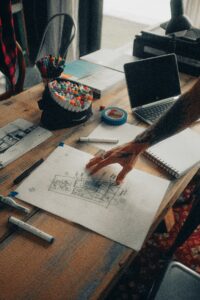
This is why design becomes the most important phase of the project.
A successful tiny home is designed from the inside out. Storage is integrated into the structure rather than added afterward. Furniture is often built as part of the architecture itself. Windows are placed not just for aesthetics, but to control airflow, natural light, and heat gain. Every element works together as part of a system.
How Tiny Homes Are Built in the Riviera Maya
Construction methods in this region differ significantly from those in North America. In the United States and Canada, many tiny homes are built on trailers or lightweight framing systems. That approach does not translate well to the Riviera Maya.
Here, climate dictates construction.
Heat, humidity, and the risk of hurricanes require more durable solutions. Most tiny homes are built using reinforced concrete or hybrid structural systems. This provides long-term durability, resistance to moisture, and the structural integrity needed to handle extreme weather conditions.
It also allows for greater design flexibility. Because structures are formed rather than assembled from standardized components, architects can create custom openings, higher ceilings, and more expressive layouts without being limited by prefabricated systems.
Integrating protección contra huracanes www.hurricanesolution.com/proteccion-contra-huracanes, including systems like lonas anticiclónicas and mallas anticiclónicas, becomes a critical part of building responsibly in this region.
Designing Space That Actually Works
The success of a tiny home ultimately comes down to how well the space functions. A well-designed home does not feel small—it feels efficient and intentional.
Vertical space becomes one of the most powerful tools in design. Instead of expanding outward, the home expands upward. Lofted sleeping areas, higher ceilings, and vertical storage solutions create a sense of openness while maintaining a compact footprint.
Outdoor living also plays a major role. In the Riviera Maya, terraces, shaded seating areas, and small pools effectively extend the living space beyond the walls of the home. When indoor and outdoor areas are designed together, the home feels significantly larger than its actual size.
For those exploring living in Playa del Carmen www.iplayadelcarmen.com, this indoor-outdoor integration is one of the defining aspects of the lifestyle.
Materials That Perform in a Tropical Climate
Material selection is not just about appearance—it is about long-term performance.
The Riviera Maya presents specific challenges: high humidity, heat, salt air in coastal zones, and heavy seasonal rain. Reinforced concrete provides the structural backbone for most high-quality builds, but the performance of the home depends just as much on the materials used inside.
Thermal window systems are critical. Large glass openings are common in modern design, but without proper glazing, they can trap heat and increase energy consumption. Properly specified windows reduce solar heat gain while maintaining natural light.
Wall finishes, coatings, and construction details must also address moisture control and durability. These decisions are made early in the process and have long-term consequences.
Energy Efficiency in Tiny Homes
One of the natural advantages of a smaller home is reduced energy demand. However, that advantage only holds if the design responds correctly to the environment.
Energy efficiency in the Riviera Maya starts with passive design. Orientation, window placement, and cross ventilation reduce the need for mechanical cooling. When combined with thermal glazing, shading strategies, and proper insulation, the difference in energy consumption can be substantial.
Tiny homes also pair well with solar systems. Because overall demand is lower, solar becomes more viable both technically and financially.
Tiny Homes as Investment Properties
From an investment perspective, tiny homes represent one of the more compelling opportunities in the Riviera Maya.
A single well-designed unit can perform strongly, but the real potential lies in developing multiple units on a single property. Shared infrastructure combined with multiple rental streams creates a scalable model.
In markets like Tulum and Playa del Carmen, where design directly impacts rental performance, smaller properties that deliver a strong experience often outperform larger, less intentional developments.
For those looking at luxury homes in Playa del Carmen www.playadreams.com, this shift toward experience-driven design is already reshaping the market.
Fact Box
- Tiny homes maximize land efficiency in high-value areas
- Design quality matters more than size in rental performance
- Reinforced concrete is the standard for durability
- Indoor-outdoor integration expands usable living space
- Energy efficiency is easier to achieve in smaller homes
Internal Topic Authority
- Custom home builder Playa del Carmen www.playabuilder.com/builder-playa-del-carmen
- Home construction in Playa del Carmen www.playabuilder.com
- Construction company Riviera Maya www.playabuilder.com/construction-riviera-maya
Related Topics
- Cost to Build a House in Playa del Carmen
- How Long Does It Take to Build a House in Playa del Carmen
- Concrete vs Steel Homes in the Riviera Maya
- Solar Power Systems for Homes in the Riviera Maya
- The Biggest Mistakes Foreigners Make When Building in Mexico
Conclusion
Tiny homes are not about building less. They are about building with intention.
When designed and executed correctly, they offer a smarter way to live, a more efficient way to build, and a stronger way to invest in one of Mexico’s fastest-growing regions.
In places like Playa del Carmen, Tulum, and Cancun, where lifestyle, climate, and market dynamics all intersect, tiny homes are not a compromise.
They are an evolution.
FAQ
Are tiny homes cheaper to build in Playa del Carmen?
They can be, but cost depends on design, materials, and execution. Poorly designed small homes can actually become inefficient and expensive.
Can tiny homes handle hurricanes?
Yes, when built with reinforced concrete and proper protección contra huracanes systems, they can perform very well in extreme weather.
Are tiny homes good for rentals?
Yes. Well-designed tiny homes often outperform larger properties because they offer a more unique and curated experience.
How big is a typical tiny home in the Riviera Maya?
Most range between 30 m² and 90 m², depending on layout and intended use.
Can I build multiple tiny homes on one lot?
Yes, depending on zoning and permits. This is one of the most attractive investment strategies in the region.
Luxury in this context is not about excess. It is about precision. It is about doing everything properly.
A luxury tiny home is defined by how well it is designed, how well it performs, and how it feels to live in. The materials, the finishes, the lighting, and the way the space functions all contribute to that experience.
When done correctly, a small home can feel more refined than a much larger one.
Final Thoughts
Tiny homes are not just a trend. They are part of a broader shift in how people think about space, design, and living.
In the Riviera Maya, they make sense for a number of reasons: the climate, the market, and the way people actually use their homes here.
But the outcome depends entirely on execution.
A well-designed and properly built tiny home can deliver a level of functionality, efficiency, and experience that larger homes often fail to achieve. A poorly executed one does the opposite.
That is why the builder matters.
Choosing a builder in Playa del Carmen who understands not just construction, but design, climate, and project management, is what ultimately determines whether the project succeeds.
At PlayaBuilder, the goal is straightforward: to build homes—regardless of size—that perform at a level others cannot match.
FAQ: Tiny Homes in Cancun, Playa del Carmen, and Tulum
Are tiny homes legal in Mexico?
Yes, but regulations vary depending on zoning and land use. Proper planning is required before construction begins.
How much does it cost to build a tiny home?
Costs depend on design, materials, and level of finish. While total cost is lower than larger homes, cost per square meter can be higher due to the level of detail involved.
Can tiny homes handle hurricanes?
Yes, when built with proper structural systems such as reinforced concrete, they can be designed to withstand hurricane conditions.
Are tiny homes good for Airbnb?
Yes. In areas like Tulum and Playa del Carmen, well-designed tiny homes can perform very well in the short-term rental market.
How long does it take to build a tiny home?
Timelines are generally shorter than larger homes, but proper planning and execution are still critical to avoid delays.